US EIA Raises Oil Price Forecasts Again Amid Fears Iran Conflict Will Drain Global Stockpiles
 admin
admin 
On Tuesday, the US Energy Information Administration (EIA) once again increased its oil price projections for both this year and next. The upward revision comes as the ongoing conflict with Iran continues to deplete global stockpiles and strain diesel markets.
According to the EIA’s latest Short-Term Energy Outlook, the global benchmark Brent crude is now projected to average approximately $98 per barrel in 2026, marking an 8% increase from prior estimates.
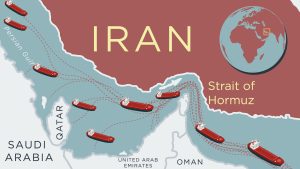
The conflict involving the US, Israel, and Iran has triggered a sharp rise in energy costs. The war has severely disrupted shipping through the vital Strait of Hormuz, a maritime chokepoint that previously handled roughly 20% of the world’s petroleum supply. Additionally, retaliatory strikes by Iran against regional energy infrastructure following US military actions have further constrained supply.
These shrinking inventories and tight diesel markets are expected to sustain high crude prices in the near term. The EIA anticipates Brent will average around $105 per barrel during the fourth quarter, a $14 jump from its previous forecast. Meanwhile, US retail diesel prices, which peaked at historic highs last month, are projected to stay above $6 per gallon through October before declining to an average of about $4.50 per gallon in 2027.
Looking further ahead, the EIA expects Brent prices to ease to an average of $84 per barrel in 2027—though this is still $10 higher than previously forecast. This projected decline hinges on a gradual recovery in Middle Eastern oil production and exports as shipping conditions in the strait improve and energy companies increasingly utilize alternative transit routes and ship-to-ship transfers.
Export volumes have already shown signs of recovery. Saudi Arabia has successfully bypassed the Strait of Hormuz by resuming shipments via its East-West Pipeline to the Red Sea. Furthermore, regional exporters are circumventing security threats to infrastructure and shipping by employing “dark transits,” where tankers turn off their tracking systems to conduct mid-sea cargo transfers.
Thanks to these adaptation strategies, Gulf oil exports (excluding Iran) rebounded to over 81% of their pre-war volumes in September.
As these logistical workarounds become more widespread, the EIA estimates that global crude production outages will drop from 4.5 million barrels per day (bpd) in the final quarter of 2026 to 2.7 million bpd by the first quarter of 2027.