Saudi Aramco investigates alternative oil export channels to enhance supply resilience
 admin
admin 

(Oil & Gas 360) – Saudi Aramco is currently assessing new routes for crude oil exports alongside expanded international storage capabilities, responding to transit challenges in Middle Eastern energy corridors that underscore the necessity of secure supply networks and alternative logistics.
During his address at the World Petroleum Congress in Riyadh on Monday, Aramco President and CEO Amin Nasser stated that the energy giant is exploring measures to enhance export agility while guaranteeing uninterrupted shipments to global markets.
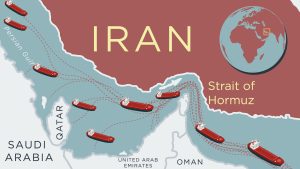
This strategic move is driven by ongoing regional tensions and shipping constraints near the Strait of Hormuz, which threaten standard oil transport lanes. Because this crucial maritime passage carries a major share of the world’s traded crude, alternative logistics options have become a priority for leading suppliers and buyer nations alike.
Saudi Arabia already utilizes its East-West pipeline to move crude oil from eastern production hubs to Red Sea terminals at Yanbu. While this route successfully avoids the Strait of Hormuz, alternative marine paths in the region still contend with localized security vulnerabilities.
Adding to these efforts, Saudi Energy Minister Prince Abdulaziz bin Salman noted on Monday that the nation is evaluating a plan to boost its total pipeline export threshold up to 10 million barrels per day within two to three years.
To achieve this target, infrastructure would be upgraded, and a natural gas line might be temporarily repurposed for crude transportation. The minister highlighted that converting this line could yield an immediate 1.2 million barrels per day in capacity in less than two months, with further funding opening up higher volumes.
In tandem, Aramco is exploring new storage arrangements abroad. Holding reserves near key consumption centers allows the firm to fulfill orders during sudden transport blockages and offers greater flexibility when catering to primary international markets.
In the past, Aramco has relied on strategic storage partnerships across Asia, namely in South Korea and Japan, to support its global distribution framework.
These actions mirror a sector-wide pivot toward securing transportation corridors. Recent supply chain shocks have shown that crude production volumes must be paired with open pipelines, ports, and sea lanes to ensure delivery.
Developing secondary export channels helps producers limit exposure to localized bottlenecks and improves supply chain control. Nevertheless, constructing expanded pipeline systems and storage hubs demands major financial outlays, regulatory clearances, and comprehensive long-range planning.
Infrastructure providers, midstream firms, and engineering contractors stand to gain from potential contracts involving pumping station upgrades, pipeline conversions, and storage facility development.
Refining operations and international petroleum importers could similarly experience enhanced supply stability, reducing their vulnerability to regional maritime disruptions.
From an investment standpoint, Aramco’s initiative emphasizes that transport dependability is just as vital as raw output levels and market pricing. Flexible distribution channels directly affect profit margins, operating overhead, and a supplier’s capacity to maintain sales flows during geopolitical events.
Furthermore, these prospective projects may influence long-term corporate capital spending, as major oil players increasingly weigh logistics resilience against traditional upstream exploration.
Though Aramco has not formally authorized specific construction timelines or finalized capital commitments for these additional export channels, its current evaluations highlight how energy producers are adjusting to modern geopolitical and logistical challenges.
Future monitoring will focus on official project approvals, allocated capital expenditure, and concrete progress regarding the expansion of Saudi Arabia’s pipeline grid and foreign storage assets.
Disclaimer
This informational, opinion, and insights article is provided for informational purposes only and does not constitute investment, legal, or financial advice. The views expressed are based on publicly available information and market conditions at the time of publication and are subject to change without notice.