Syrian Energy Revival Set to Transform Middle Eastern Oil and Gas
 admin

Following over a decade of conflict that severely damaged infrastructure and displaced millions, Syria is embarking on a comprehensive reconstruction campaign. The government is prioritizing economic diversification, with a heavy emphasis on developing the energy sector to position the country as a regional transit hub.
**Political and Structural Reform**
President Ahmed al-Sharaa established a transitional government on March 29, 2025, following the collapse of the Assad regime. The administration introduced economic, security, and legal reforms designed to stabilize the economy ahead of national elections planned for 2030.
The transitional government has unified national energy governance by taking control of key sites, including the Omar oil field and Tabiyeh gas complex—assets previously separated from Damascus during the war. A 2026 agreement with the Kurdish-led Syrian Democratic Forces (SDF) aims to integrate SDF structures into the state, further consolidating control over energy resources. Concurrently, the lifting of U.S. and EU sanctions alongside Syria’s reconnection to the SWIFT banking system has reopened the country to foreign investment.
**Oil and Gas Revival**
Prior to the 2011 conflict, Syria produced approximately 380,000 barrels per day (bpd) of crude oil and 900 million cubic feet per day of natural gas. Wood Mackenzie estimates that the conflict reduced crude production by 80% and gas output by 50%. Despite these losses, Syria retains an estimated 1.3 billion barrels of oil equivalent in reserves, along with unexplored onshore blocks and an untapped offshore zone.
In May 2026, Syria announced its first offshore deep-water exploration project, to be developed jointly by Chevron, Qatar’s UCC Holding, and the state-owned Syrian Petroleum Company (SPC). Additional U.S. energy firms have signaled interest in domestic projects under the new government.
**Geopolitical and Transit Advantages**
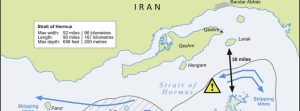
Ongoing disruptions and trade restrictions in the Strait of Hormuz have increased Syria’s viability as an alternative energy corridor. Due to its Mediterranean access and shared border with Turkey’s major pipeline networks, Syria is being targeted as an “energy land bridge” capable of transporting Persian Gulf crude oil and natural gas directly to European markets.
**Renewable Energy and Grid Expansion**
Syria is also expanding its power sector through renewable energy initiatives to address domestic electricity deficits:
* **Solar Growth:** Decentralized off-grid solar capacity expanded from roughly 250 MW in 2022 to over 2 GW by 2025.
* **Thermal and Solar Infrastructure:** In June 2025, Syria signed a $7 billion deal with a Qatari, Turkish, and U.S. consortium to construct four gas-fired power plants and a 1 GW solar farm, targeted to deliver 5 GW of new capacity.
* **Solar and Wind Contracts:** A September 2025 Joint Development Agreement with Saudi Arabia’s ACWA Power aims to build 1 GW of solar PV, 1.5 GW of wind generation, and utility-scale battery storage.
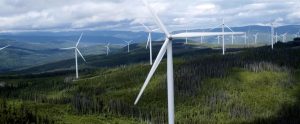
* **Domestic Wind Manufacturing:** In February 2026, the Ministry of Energy partnered with Dubai-based Marv Energy to construct a 700-MW wind farm using 140 turbines manufactured locally in Homs, with completion scheduled within five to seven years.
* **Hydroelectric Facilities:** In October 2026, the government issued a request for expressions of interest for the $1.16 billion Halabiya-Zalabiya Dam project on the Euphrates River. The site is designed to feature an 81-MW traditional hydroelectric plant and a 1.2-GW pumped-storage facility.
While Syria possesses substantial conventional and renewable energy potential, its long-term economic recovery remains highly dependent on sustained foreign capital to rebuild its infrastructure.