Liberia to Launch 2026 Direct Negotiation Licensing Round in Q4, LPRA Announces
Liberia will launch its 2026 offshore licensing round in Q4, backed by expanded seismic data, technical studies and regulatory reforms.
The post Liberia to Launch 2026 Direct Negotiation Licensing Round in Q4, LPRA Says at Investor Showcase appeared first on Energy Capital & Power.
 admin
admin 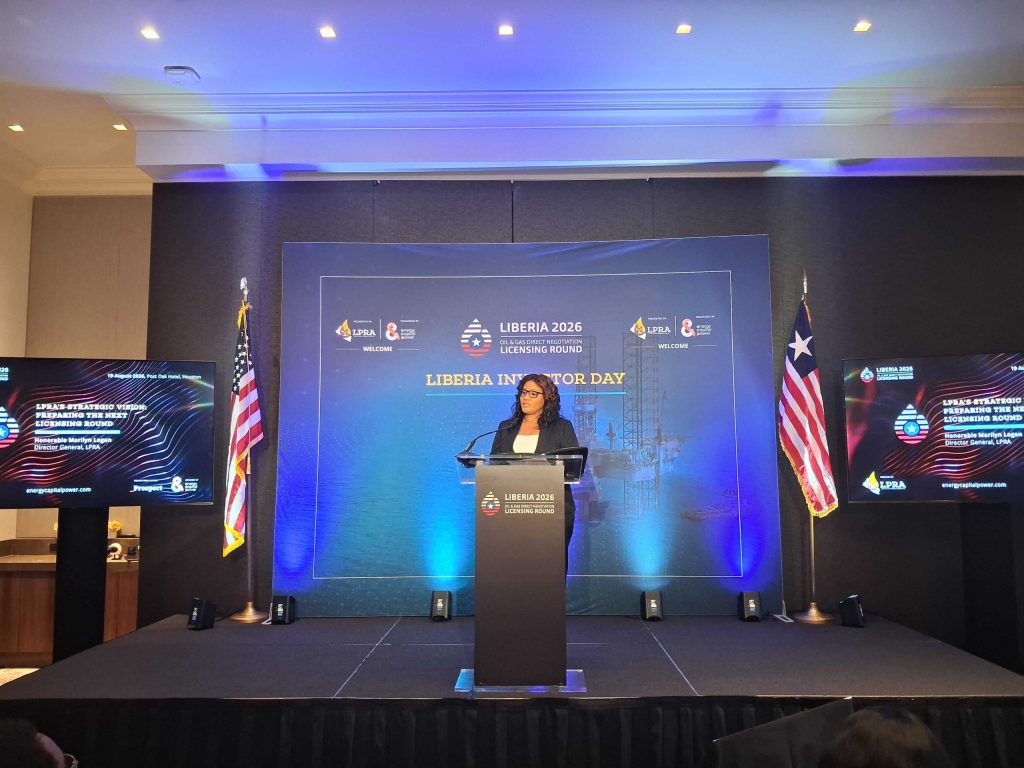
The Liberia Petroleum Regulatory Authority (LPRA) has announced it will launch its 2026 direct negotiation offshore licensing round in the fourth quarter of 2026. During a Liberia Investor Day event held in Houston on August 19, in partnership with Energy Capital & Power, LPRA Director General Marilyn Logan detailed the upcoming acreage opportunities, regulatory frameworks, and geological data aimed at attracting diverse exploration partners.
Logan emphasized that frontier exploration demands flexible, long-term agreements, noting that the upcoming process is designed to accommodate both companies ready for immediate action and those requiring more time for data acquisition and technical reviews.
The licensing framework is governed by the 2014 Petroleum Exploration and Production Act and its 2019 amendments. To ensure strict fiscal oversight, all agreements must be jointly executed with the Minister of Finance and Development Planning.
This upcoming round follows a successful 2025 campaign in which eight deepwater production sharing contracts (PSCs) were ratified, bringing in over $27 million in signature bonuses and $14.6 million in surface rentals. Currently, TotalEnergies is developing blocks LB-06, LB-11, LB-17, and LB-29, while Oranto Petroleum is advancing its programs on blocks LB-15, LB-16, LB-22, and LB-24.
Isaac E. Taggart Jr., Special Envoy for U.S. Trade and Investments for Liberia’s Ministry of Foreign Affairs, reiterated the nation’s commitment to securing serious, long-term strategic partners to transition Liberia’s petroleum potential into active execution through technology and capital.
To support exploration decisions, seismic data provider TGS highlighted its extensive data coverage, which includes over 50,000 line-km of 2D seismic and 31,000 km² of 3D data. TGS Business Development Manager Johnny Chigbo noted that new wide-tow and long-offset imaging technology covering up to 44,800 km² across the Liberia and Harper Basins will be crucial for evaluating deep and ultra-deep prospects.
TGS Geoscience Director Henri Houllevigue added that previous discoveries, such as the Narina oil find in the Upper and Lower Cretaceous plays, prove the viability of Liberia’s petroleum system. The region’s geological architecture offers multiple targets, including Early Cretaceous syn-rift structures and Late Cretaceous basin-floor fans.
Additionally, technical presentations from Core Laboratories and KC Geoscience Consulting highlighted opportunities in shallower waters. Core Laboratories Vice President Joe Ramoin emphasized that the wealth of existing data significantly reduces exploration risk, while KC Geoscience Advisor Karen Carlson pointed out overlooked exploration plays in shallow-water zones that have remained inactive for over four decades. The technical insights shared in Houston are expected to guide investor evaluations ahead of the official Q4 launch.