UK Jackdaw Gas Field Approved, First Output Slated for This Month
 admin
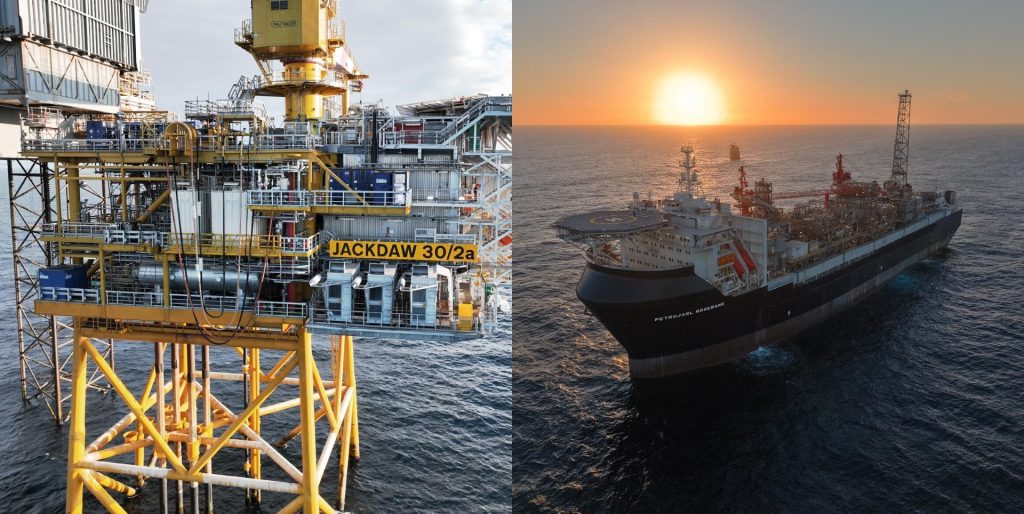
The UK government has granted development and production consent for the Jackdaw gas-condensate field in the North Sea, paving the way for operator **Adura**—a 50/50 joint venture between **Shell UK** and **Equinor UK**—to begin operations within weeks. Located 225 km (140 mi) east of Aberdeen, the field holds an estimated **68 million barrels of oil equivalent (MMboe)**. At its peak, Jackdaw is projected to boost the UK’s domestic gas supply by approximately 6%, providing enough energy to heat roughly 1.4 million homes.
The North Sea Transition Authority (NSTA) approved the £2.1-billion project on Oct. 21 following an environmental assessment by the Offshore Petroleum Regulator for Environment and Decommissioning (OPRED) and formal agreement from Energy Secretary **Miatta Fahnbulleh**.
The approval resolves a regulatory pause from January 2025, when a judicial review halted the project’s initial 2022 consent. That suspension followed the Supreme Court’s 2024 Finch ruling, which required the full assessment of Scope 3 emissions resulting from burning the extracted fuel. The government confirmed that proceeding with Jackdaw aligns with its net-zero 2050 targets, carbon budget commitments, and its pledge to refrain from issuing new exploration licenses, as the field was already under existing license.
“Following careful consideration of all relevant factors I have agreed that the regulator can grant consent for gas to be produced at Jackdaw, which will begin to supply the UK with gas from this winter thanks to the highly skilled and vital North Sea workers,” Fahnbulleh stated.
Adura CEO **Neil McCulloch** welcomed the decision, noting that it brings operational certainty to the workforce and supply chain while reinforcing evidence-based energy policy.
Data from energy research firm **Wood Mackenzie** highlights key metrics for the project:
* **Production:** Expected to average around 140 million cubic feet per day (MMcfd) in 2027, representing nearly 6% of total UK Continental Shelf gas output.
* **Emissions:** Total emissions are estimated at 24 MtCO₂e over a nine-year operational lifespan.
* **Economic Impact:** The field is projected to generate roughly £1.5 billion in tax revenue at current market rates, with internal rate of return (IRR) estimates rising from 9% to over 14% due to higher commodity prices.
Wood Mackenzie also noted that relying on imported liquefied natural gas (LNG) from the U.S. instead of domestic production from Jackdaw would generate an additional 3.5 MtCO₂e in net Scope 1 and 2 emissions. Research Director **Gail Anderson** emphasized that halting the project would have ultimately increased global emissions rather than reducing them due to the higher carbon intensity of imported LNG.
Following the Jackdaw clearance, industry attention has shifted to the pending review of the Rosebank field. Organizations including Adura, INEOS, ETZ Ltd, and the Aberdeen & Grampian Chamber of Commerce have called for prompt regulatory action on Rosebank. Combined, Jackdaw and Rosebank account for £10.8 billion in planned infrastructure investment and could satisfy roughly 10% of total UK oil and gas demand at peak capacity.
To support ongoing energy security, the government has requested that the NSTA prioritize urgent subsea tieback applications while new Transitional Energy Certificates legislation is finalized. Additionally, the government announced the establishment of a £2-billion Energy Wealth Fund designed to redirect North Sea tax revenues toward low-carbon technology developments.