The Strategic Significance of the Bab el-Mandeb Strait
 admin
admin 
**Houthi Push for Red Sea Coast Threatens Vital Bab el-Mandeb Shipping Strait**
The Iran-backed Houthi movement is working to seize complete control of Yemen’s Red Sea coastline. This offensive aims to solidify their influence over the Bab el-Mandeb Strait, one of the globe’s most critical and highly contested maritime chokepoints.
Having already declared a naval blockade against Saudi Arabia—the world’s top oil exporter—the militant group’s dominance over this waterway threatens to further cut off Gulf energy producers from their primary shipping corridors.
### Understanding the Bab el-Mandeb Strait
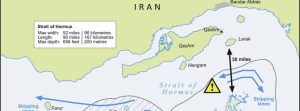
Commonly referred to as the “Gate of Tears” due to its historically hazardous navigation, the Bab el-Mandeb Strait connects the Red Sea to the Gulf of Aden. It is situated between Yemen on the Arabian Peninsula and Djibouti and Eritrea on the African coast. The strait sits on the opposite side of the Arabian Peninsula from the Strait of Hormuz, which remains a central focal point in U.S.-Iran tensions.
At its narrowest point, the waterway spans just 18 miles (29 km). This narrow width restricts maritime traffic to two primary shipping lanes—one inbound and one outbound—which are split by the Yemeni island of Perim (Mayyun).
To the north of the strait lie the Hanish Islands, situated between the key port cities of Hodeidah and Mocha. This positioning grants whoever holds the islands a strategic vantage point over incoming vessels. Currently, the Houthis control Hodeidah, utilizing the port as a launchpad for their ongoing attacks on Red Sea shipping.
The group is actively pushing southward, targeting Mocha—a historic port famous for its role in the early global coffee trade—as well as Dhubab, a city located directly on the strait. Securing Dhubab and Perim island is considered essential for establishing total control over the passage.
### Global Trade and Commodity Flows
The Bab el-Mandeb serves as a primary artery for international maritime trade, connecting Asian markets to Europe via the Suez Canal. It is also vital for shipments utilizing Egypt’s Suez-Mediterranean pipeline, as well as for commodities heading to Asia, including Russian crude oil.
Because the strait acts as the southern gateway to the Suez Canal, vessels must navigate through it to access the canal from the south. Any disruption to this passage forces shipping companies to bypass the Red Sea entirely, routing vessels around Africa’s Cape of Good Hope. This detour adds weeks to transit times and drives up shipping costs.
### The Impact of Houthi Control
The consequences of even partial disruption in the region have already been felt globally. In late 2023, the Houthis initiated a series of attacks on commercial vessels in the southern Red Sea and the Bab el-Mandeb, framing the campaign as an act of solidarity with Palestinians in Gaza.
The attacks prompted immediate responses from the global shipping industry. Major maritime carriers and energy giants—including Maersk, MSC, Hapag-Lloyd, BP, and tanker operator Frontline—began diverting their fleets around the southern tip of Africa. This shift led to a sharp rise in freight rates and extended delivery schedules.
If the Houthis secure a permanent grip on the waterway, it could provide Iran with significant geopolitical leverage in its ongoing confrontations with the United States. This comes at a time when energy shipments through the Strait of Hormuz have already faced reductions, causing volatility in global oil prices.
According to data from Kpler, total petroleum shipments passing through the Bab el-Mandeb accounted for approximately 7% of global oil production as of mid-2026.