Six Months into Iran War, War Zones Account for Nearly Half of Global Oil Flows
 admin
admin 
**Global Oil Supply Crisis Deepens as Conflicts Impact Nearly Half of World Output**
**LONDON** — Roughly 43% of the world’s oil supply now originates from nations currently embroiled in or affected by active conflicts, according to recent calculations. The scale of these disruptions has surpassed previous historical energy crises, highlighting the extreme vulnerability of global energy security in 2026.
The current crisis was sparked six months ago by U.S. and Israeli military strikes on Iran, initiating the largest oil supply disruption in history. With no resolution in sight, the geopolitical strain on energy markets is compounding daily.
In addition to the Middle East conflict, several other global flashpoints are squeezing supply:
* **Russia-Ukraine War:** Ongoing hostilities have forced significant cuts to both oil production and refining capacity, extending impacts into neighboring Kazakhstan.
* **Libya:** Persistent domestic conflict continues to destabilize the country’s oil output.
* **Venezuela:** Early-year U.S. export restrictions have further restricted heavy crude flows.
Combined, these affected nations produced approximately 45 million barrels per day (bpd) in 2025, representing nearly half of the global market. While these disruptions have not all peaked simultaneously, they have forced a heavy global reliance on U.S. crude, which itself remains vulnerable to extreme weather events.
### Shipping Bottlenecks and Refining Shortages
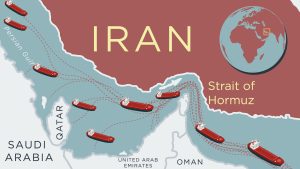
The Strait of Hormuz and the Red Sea remain major geopolitical chokepoints. To bypass high-risk zones, Saudi Arabia has rerouted supplies through the Red Sea, while other Gulf exporters have resorted to covert shipping methods to move oil out of the Persian Gulf. Despite these workarounds, analysts estimate active Gulf supply disruptions sit between 5 million and 7 million bpd. Security risks remain high, as evidenced by recent July attacks near the Suez Canal and in the Red Sea.
Beyond crude extraction, global refining capacity has been slashed by nearly 10%. Ukrainian drone strikes have repeatedly targeted Russian refining infrastructure, hitting facilities as far as 2,700 kilometers (1,680 miles) from Ukrainian territory. In response to domestic fuel shortages, Russia has banned gasoline and diesel exports, further tightening international refined product markets.
### Economic Fallout
The resulting surge in fuel costs has emerged as a primary driver of global inflation, prompting central banks to maintain high interest rates. In the United States, diesel prices have soared to record highs despite domestic refineries operating at maximum capacity. These economic pressures have also contributed to U.S. national debt climbing to a historic $40 trillion.
To mitigate the supply shock, the International Energy Agency (IEA) previously deployed record volumes of crude from emergency stockpiles. However, those emergency releases have largely concluded, leaving global oil inventories on a steady downward trajectory as demand continues to outpace disrupted supplies.