Middle East and US Supply Fears Drive Oil Prices Up
 admin
admin 
Oil prices increased on Wednesday as market participants evaluated potential threats to crude shipments originating from both the Middle East and the United States.
By 08:55 ET (12:55 GMT), Brent crude futures gained 0.9%, reaching $101.50 per barrel, while U.S. West Texas Intermediate (WTI) crude futures rose 0.4% to trade at $89.80 per barrel.
Prices had initially dipped toward $97 per barrel during the prior session. This temporary drop followed data indicating that Gulf oil exporters had exceeded pre-war export volumes for about half of September. Additionally, sentiment was supported by the Group of Seven’s recent commitment to tap into emergency fuel reserves, alongside the resumption of operations on Saudi Arabia’s East-West pipeline, which collectively eased concerns over Middle Eastern supply availability.
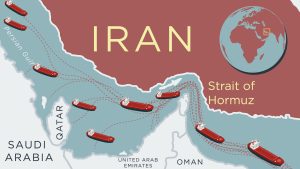
However, the downward trend was brief. Brent quickly rebounded past the $100 threshold due to renewed anxiety over escalating Iranian attacks on tankers navigating the Strait of Hormuz, according to Deutsche Bank analysts. Iranian state media also reported an explosion near Qeshm Island close to the strait, intensifying fears of shipping bottlenecks in the critical maritime corridor. The passage has remained largely blocked since a joint U.S.-Israeli military operation in Iran in late February.
Concurrently, hostilities have escalated in Yemen between Saudi-backed coalition forces and Iran-aligned Houthi rebels. Government and Saudi forces have ramped up airstrikes to reclaim Houthi-held regions, particularly those bordering the Bab el-Mandeb Strait, another vital transit route for global oil shipments.
ING analysts noted that the market is currently caught in a balancing act between rising regional exports and ongoing security threats, suggesting that prices are unlikely to see a sustained decline until these geopolitical risks are fully resolved.
Adding to the supply concerns, a major storm system is tracking toward key energy production zones in the United States. Meteorologists warn the system could strengthen into the first Atlantic hurricane of 2026 within 48 hours, threatening an area responsible for 15% of U.S. crude output and 5% of its natural gas production.
On the domestic front, data from the American Petroleum Institute (API) released on Tuesday indicated that U.S. crude stockpiles decreased by 2.09 million barrels for the week ending October 2. Official government inventory figures from the Energy Information Administration (EIA) are scheduled for release later on Wednesday.