Goldman Sachs Raises European Gas Price Outlook Amid Hormuz Disruption Risks
 admin
admin 
Goldman Sachs has increased its short-term European gas price projections, citing a delayed recovery in Persian Gulf liquefied natural gas (LNG) shipments due to ongoing Middle Eastern tensions.
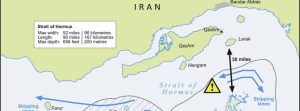
The bank’s analyst, Samantha Dart, now projects that LNG exports from the Persian Gulf will not return to normal until October, shifting back from her previous July estimate. This delay is attributed to persistent shipping disruptions in the Strait of Hormuz, a vital maritime corridor responsible for transporting approximately 20% of global LNG exports and one-fifth of the world’s oil consumption.
This supply disruption is expected to reduce the global LNG supply by 16 million tonnes per annum (about 4%) over the remaining summer months. Consequently, Northwest European gas storage levels are projected to reach only 67% capacity by the end of October—the start of the winter season—down from the earlier estimate of 74%. Assuming normal winter temperatures, storage levels are expected to drop to 28% capacity by late March.
In response to these tighter balances, Goldman Sachs revised its third- and fourth-quarter 2026 Title Transfer Facility (TTF) price forecasts upward to 60 and 53 euros per megawatt-hour (MWh), respectively, compared to previous estimates of 41 and 40 euros. The full-year 2027 price forecast was also nudged up to 31 euros per MWh from 30 euros.
Dart noted that because European winter gas balances are highly sensitive to disruptions, TTF prices are expected to trade near 65 euros per MWh for the rest of the summer, a pricing threshold designed to suppress competing Asian LNG demand.
The bank warns that short-term price risks remain tilted to the upside, advising gas consumers to hedge against potential winter spikes. If Middle Eastern energy exports recover only gradually through 2027, TTF prices could surge past 100 euros per MWh to sufficiently limit Asian demand. On the other hand, a swift resolution to the Hormuz shipping issues could pull prices down to around 40 euros per MWh, aligning with coal-to-gas switching levels.
For the longer term, Goldman Sachs keeps its bearish outlook for 2028 and 2029, projecting TTF prices at 19 and 16 euros per MWh, respectively, assuming the Strait of Hormuz remains fully operational. Additional downward price pressure could come from upcoming U.S. LNG export ventures alongside rising coal and renewable energy generation in Asia.