Deloitte: Oilpatch profits vastly outpace spending, for now
 admin
admin 
**Oilpatch Profits Surge Ahead of Capital Spending, But Shift Toward Growth May Be Coming: Deloitte**
A new report from Deloitte Canada reveals that operating profits for Canadian oil producers jumped 68 percent between the first and second quarters of this year. However, capital expenditures have not kept pace with this financial windfall.
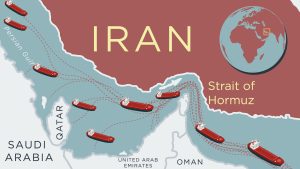
According to Statistics Canada, the oil sector was the largest contributor to non-financial industry profits during the second quarter. This surge was driven by high crude prices, which experienced significant volatility due to conflict in the Middle East—with international Brent crude fluctuating between US$68 and US$105 per barrel in July and August.
In contrast, capital spending rose only modestly, increasing about seven percent to $11 billion in the second quarter compared to the first. Rather than investing in long-cycle, capital-intensive projects, producers are prioritizing drilling programs in regions like the Montney, Duvernay, and Clearwater, which offer efficient, short-cycle economics. Deloitte notes that Canadian drilling was up 17 percent year-over-year in the second quarter, indicating that producers view the current high-price environment as temporary or uncertain. Deloitte forecasts West Texas Intermediate (WTI) crude to average US$76.50 per barrel in 2027, down from a projected US$90 in 2026.
Andrew Botterill, national leader of Deloitte Canada’s oil, gas, and chemicals practice, noted that energy companies have spent the last five to eight years under intense investor pressure to control debt and limit spending, especially following the market shocks of the COVID-19 pandemic and the 2014–2015 downturn.
However, the outlook is shifting toward long-term growth. Momentum is building around a proposed one-million-barrel-per-day export pipeline to the British Columbia coast. Additionally, Prime Minister Mark Carney’s government has introduced measures to streamline regulations, roll back environmental policies from the Trudeau era, and expand investment tax incentives.
“We could see significant growth coming from Canada,” Botterill said, predicting that companies will begin making larger, strategic capital investments for the medium and long term over the coming year.
Recent major transactions signal this preparation for future growth. Cenovus Energy Inc. recently announced a $5.7-billion acquisition of Athabasca Oil Corp., while Suncor Energy Inc. agreed to sell off some of its Atlantic Canada offshore assets for $1.2 billion to focus on its core oilsands operations. Botterill characterized these moves as portfolio realignments ahead of longer-term capital deployment.
On the natural gas side, Alberta prices have remained low, averaging under C$2 per thousand cubic feet year-to-date. This persists despite increased exports from the LNG Canada terminal in Kitimat, B.C., which began operations in mid-2025. Natural gas production averaged 20 billion cubic feet per day in the second quarter—up five percent from the same period last year—as producers targeted valuable natural gas liquids like propane.
Despite low prices, Botterill pointed out that Alberta gas prices avoided their typical sharp late-summer declines, indicating stronger structural demand and improved export capacity off the West Coast. Deloitte projects Alberta natural gas prices will average C$1.75 per thousand cubic feet this year, rising to $2.15 next year and exceeding $3 after 2029.
The Deloitte report also examined the adoption of artificial intelligence in the energy sector. While 72 percent of energy, resource, and industrial companies utilize “physical” AI via machinery and control systems, only 16 percent use the technology extensively. Many organizations still struggle to scale AI from pilot projects to company-wide implementation.
While the oil and gas sector is historically comfortable with high-risk, capital-intensive investments, Deloitte concluded that AI initiatives must present highly developed business cases to successfully compete for funding against core development, expansion, and optimization projects.