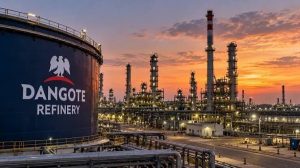
How Dangote’s $1.6B Refinery IPO Could Quintuple Nigeria’s Active Investors and Expand Its African Market Reach
 admin
The Dangote Refinery is launching an initial public offering (IPO) featuring 4.1 billion ordinary shares priced at $0.39 (₦525) per share, valuing the initial transaction at roughly $1.6 billion (₦2.15 trillion). Designed to encourage broad public participation, the minimum subscription threshold is set at just 10 shares, costing approximately $3.90 (₦5,250). Initially launched on September 14, the subscription deadline was extended to October 27 following approval from Nigeria’s Securities and Exchange Commission.
If fully subscribed, this transaction will mark the largest IPO in Africa’s history, allowing public ownership in the continent’s largest oil refinery while ensuring the Dangote Group maintains controlling interest.
According to Temi Popoola, Chief Executive Officer of the Nigerian Exchange Group, the offer could expand Nigeria’s active retail trading base by three to five times. While nearly 12 million Nigerians hold some form of capital market exposure, active traders currently number only in the hundreds of thousands.
## Broadening Investor Access
Billed by its founders as an “IPO for the people,” the offer aims to democratize access to major industrial assets typically reserved for institutional funds, asset managers, and high-net-worth individuals.
The refinery, which commenced operations in 2024, has played a critical role in curbing Nigeria’s reliance on imported refined petroleum. Currently processing 700,000 barrels per day, the facility plans to scale its capacity to 1.4 million barrels per day. Proceeds from this share sale will primarily fund this operational expansion and support adjacent petrochemical initiatives.
## Integrating Pan-African Capital Markets
Beyond domestic financial growth, the offering serves as a catalyst for cross-border market integration. The Nigerian Exchange is actively building operational links with capital markets in Egypt, Kenya, Botswana, and Ethiopia.
This cross-border trading structure relies heavily on depositary receipts—financial instruments that allow shares originating in one jurisdiction to be traded across foreign exchanges. While foundational frameworks are established, full execution remains subject to pending regulatory approvals and brokerage integration across participating nations. Consequently, direct secondary trading of the refinery’s shares across these African exchanges will materialize progressively rather than simultaneously.
Parallel to pan-African integration, several major Nigerian corporate entities are pursuing global secondary listings across major hubs in London, New York, and the Middle East. Companies like Seplat Energy, Airtel Africa, and Guaranty Trust Holding Company already maintain secondary listings on the London Stock Exchange, a path currently under evaluation by Dangote Cement.
Ultimately, the Dangote Refinery IPO represents both a gauge for market demand regarding Africa’s premier industrial assets and a structural test of Nigeria’s ability to transition retail savers into active equity market participants.