U.S. Invokes Defense Production Act to Boost Refining and Fuel Capacity
 admin
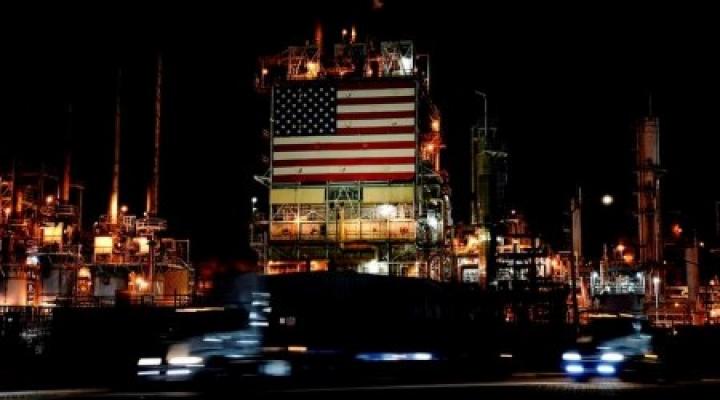

(Oil & Gas 360) – On October 22, President Donald Trump invoked the Defense Production Act to reinforce domestic oil production, refining capabilities, and energy transport systems. The move grants federal financial backing for energy infrastructure projects as sustained high prices for crude oil and diesel strain American consumers and businesses.
Through this executive determination, key sectors including upstream exploration, pipelines, storage, processing plants, and marine logistics are designated as crucial to national security. The action empowers federal authorities to leverage Section 303 of the 1950 defense law to finance initiatives aimed at bolstering domestic fuel supplies.
In tandem with the declaration, the Department of Energy revealed plans to allocate up to $150 million via the Defense Production Act specifically for refinery enhancements. Department officials indicated this capital injection could boost domestic output of gasoline, diesel, aviation fuel, and related refined goods by several million gallons daily.
Specific grant recipients have not yet been named. The administration pointed to high capital costs, extended construction timelines, regulatory hurdles, midstream bottlenecks, and supply chain frictions as key headwinds constraining domestic energy expansion.
This policy response comes against a backdrop of global oil market turbulence caused by regional conflicts involving Iran, maritime trade disruptions in the Middle East, and targeted strikes on Russian refining facilities.
These international supply shocks have driven up prices for raw crude and refined fuels alike, underscoring the vital role of U.S. downstream processing infrastructure.
While U.S. crude production continues to lead the world at roughly 13.6 million barrels daily in 2025, consumer fuel availability hinges heavily on active refining runs, fuel yields, storage reserves, and logistics networks.
Simply raising wellhead oil production offers little relief to fuel pump prices if domestic refineries are already running near maximum capacity.
Government funding is slated to support physical plant upgrades, processing capacity additions, expanded storage tankage, and efficiency enhancements across existing fuel infrastructure networks.
Vice President JD Vance recently highlighted a planned expansion at Delek US Holdings’ refinery in Tyler, Texas, as a model project for funding under the Defense Production Act authority.
For refiners, federal grants and loans could alleviate capital access challenges, though project viability will still depend on construction expenditures, compliance requirements, overhead costs, and long-term demand trends.
Upstream oil producers stand to gain indirectly through improved regional processing capacity and takeaway logistics, particularly in areas constrained by midstream bottlenecks.
Midstream operators, engineering firms, and industrial suppliers are also positioned to capture new business as federal backing stimulates fresh capital expenditure in the sector.
Ultimately, the market impact will hinge on which specific projects are selected, the volume of private capital leveraged, and the speed at which new infrastructure comes online.
Because major refining and logistics builds require extensive engineering, equipment sourcing, and construction, their ability to lower near-term fuel prices remains limited.
Upcoming milestones for the program include vetting project applicants, structuring financial terms, and establishing construction schedules.
Market observers and energy investors will be tracking official award notices, net capacity additions, capital efficiency, and operational start dates.
Overall, the administration’s actions signal a targeted effort to fortify the critical infrastructure required to process domestic crude into finished fuels for industrial and commercial transport.
Disclaimer
This informational, opinion, and insights article is provided for informational purposes only and does not constitute investment, legal, or financial advice. The views expressed are based on publicly available information and market conditions at the time of publication and are subject to change without notice.