Eni’s Quarterly Profit Doubles as Strong Refining Returns Boost Shareholder Payouts
 admin
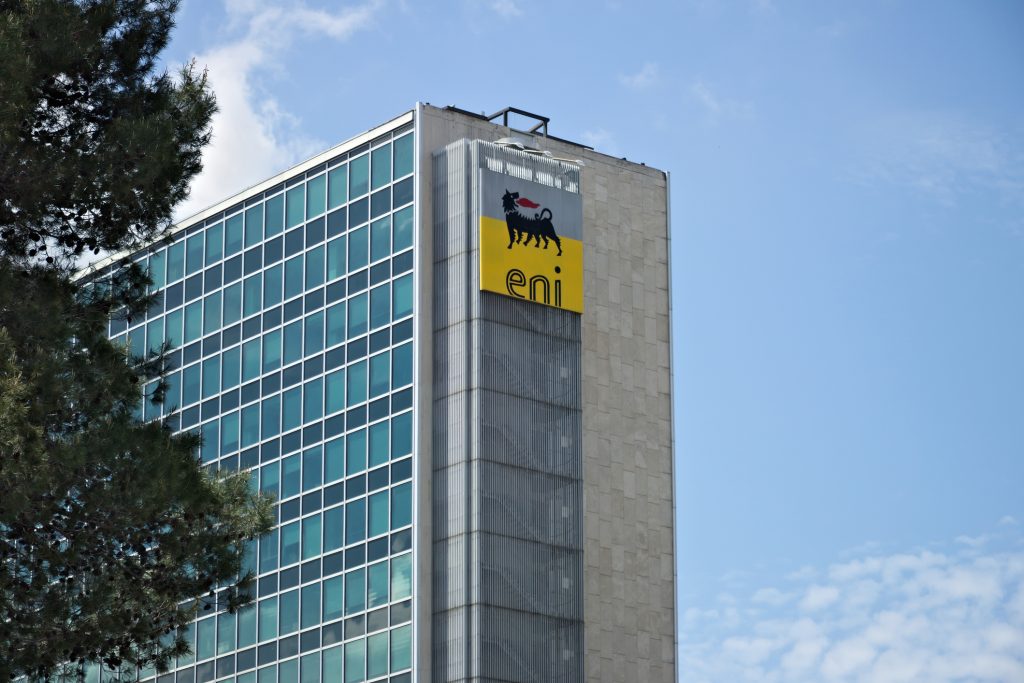

(Oil & Gas 360) – On October 23, Italian energy giant Eni announced a 125% surge in its third-quarter adjusted net profit. The financial boost was driven by rising oil and gas output, robust refining margins, and favorable commodity pricing. Following the strong performance, the firm elevated its full-year cash flow projections and expanded its returns to shareholders.
Adjusted net profit for the quarter climbed to roughly $3.14 billion (€2.8 billion), up from $1.46 billion (€1.3 billion) during the same period last year. This figure surpassed market expectations, topping the consensus estimate of $2.8 billion (€2.5 billion).
In response to these results, Eni raised its 2026 operating cash flow forecast to around $18.5 billion (€16.5 billion), a notable increase from the previous target of $16.8 billion (€15 billion).
Capitalizing on its enhanced financial position, the board approved a special dividend of approximately $1.46 billion (€1.3 billion) payable in December, alongside a 12% expansion of its stock buyback initiative to nearly $4.26 billion (€3.8 billion).
A significant portion of the growth stemmed from the company’s refining division.
Adjusted operating profit for refining surged to approximately $818 million (€730 million), fueled by higher facility utilization rates and expanded product margins.
Eni’s benchmark refining margin spiked to $28.10 per barrel in Q3, up sharply from $8.90 per barrel a year ago and $8.30 per barrel in the second quarter.
This margin expansion underscores advantageous market conditions created by geopolitical tension and supply chain bottlenecks in global fuel markets.
Even so, the unit faced headwinds from surging freight rates and adverse crude quality pricing differentials, highlighting how transport and raw material costs impact overall downstream margins.
Meanwhile, the broader refining and chemicals division faced persistent headwinds from its petrochemical business, where restructuring efforts are ongoing amid depressed margins.
Upstream performance also saw substantial gains.
Underlying hydrocarbon production rose 7% year-over-year to 1.83 million barrels of oil equivalent per day, aided by new project rollouts and contributions from the Searah joint venture in Southeast Asia.
Consequently, Eni upgraded its full-year underlying production growth outlook to a range of 6% to 7%.
Diversification efforts paid off as well, with the Enilive business delivering an 80% jump in adjusted operating profit year-over-year to roughly $459 million (€410 million).
For market observers, Eni’s performance illustrates how integrated energy providers can leverage higher upstream prices while optimizing revenues through refining and specialized operations.
The company’s balance sheet strengthened further over the period, with pro forma gearing dropping to 9%, enhancing its financial agility for strategic reinvestment and returns.
Executives reaffirmed the full-year gross capital expenditure plan of roughly $7.84 billion (€7 billion), while projecting net capital outlays to stay under $5.04 billion (€4.5 billion).
Moving forward, the market will keep a close eye on refining profitability, production execution, cash generation, and spending discipline to judge the longevity of Eni’s enhanced capital returns.
Ultimately, these quarterly achievements underscore the role of earnings diversification, operational efficiency, and prudent financial strategy in navigating volatile energy markets.
Disclaimer
This informational, opinion, and insights article is provided for informational purposes only and does not constitute investment, legal, or financial advice. The views expressed are based on publicly available information and market conditions at the time of publication and are subject to change without notice.