Tanker Threats Escalate as Iran Vows Further Hormuz Blockades
 admin
admin 
**Iran Threatens New Blockades in Strait of Hormuz, Escalating Risks for Global Oil Tankers**
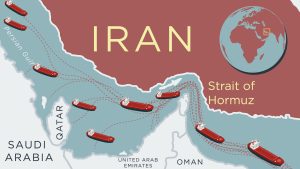
Shipping vessels navigating the critical Strait of Hormuz face a heightened threat of aggression and harassment following fresh warnings from Iran. Tehran has vowed to obstruct any unauthorized alternative shipping routes, according to regional sources.
This development follows a week of intense hostility in the vital waterway, marking the highest frequency of tanker attacks since the outbreak of the conflict with Iran. Consequently, vessel traffic through the strait has plunged to its lowest level in over two months.
A senior regional official aligned with Tehran disclosed to Reuters that Iran has warned neighboring countries that establishing new oil export routes will be treated as a hostile act. This stance represents a coordinated strategy approved by both Iran’s political leadership and the Revolutionary Guards.
**A Strategy of Intimidation**
“Iran is determined to maintain its grip on the Strait of Hormuz and is prepared to disrupt alternative export routes planned by regional nations,” a senior regional diplomat briefed by Tehran told Reuters. The diplomat warned that tactics could include missile strikes, drone operations, or deploying fast-attack boats to intimidate commercial vessels. “The objective is to sustain a policy of fear and deterrence,” he added.
Recently, Gulf oil exporters have attempted to bypass high-risk zones by routing tankers close to Omani territorial waters before transferring cargo in the Gulf of Oman, supported by U.S. aerial surveillance.
However, the threat vector appears to be expanding. The United Kingdom Maritime Trade Operations (UKMTO) reported that a tanker was struck by projectiles roughly 51 nautical miles off the coast of Qatar. Maritime security sources identified the targeted vessel as the Antigua and Barbuda-flagged chemical tanker *Acers*. The vessel suffered multiple hits north of Qatar’s Madinat ash Shamal, resulting in minor injuries to the crew. The ship’s operator, Valvoria Shipping, was unavailable for comment.
According to a report by Clearwater Dynamics, a subsidiary of maritime intelligence firm Pole Star Global, the strike on the *Acers* suggests the conflict zone is widening to encompass maritime approaches to Qatar, Bahrain, Saudi Arabia, Kuwait, and Iraq.
“The surge in Iranian hostilities has clearly reduced shipowners’ willingness to transit the Strait,” noted Jakob Larsen, head of safety and security at the shipping association BIMCO. “The threat level from Iran has undeniably escalated.”
**Global Economic Fallout**
In Washington, U.S. President Donald Trump is evaluating potential military and diplomatic responses. This includes deciding whether to intensify strikes against Iran before or after the upcoming November midterm elections, which will determine control of Congress. The administration continues to enforce a naval blockade aimed at forcing Tehran into a diplomatic settlement. The conflict, which costs an estimated $3 billion monthly, has emerged as a central campaign issue.
Meanwhile, governments and energy firms have been depleting strategic oil reserves to stabilize a global market already strained by disruptions from the war in Ukraine. Industry leaders speaking at a London energy forum warned that dwindling global oil stockpiles are leaving the market highly vulnerable to price spikes.
The maritime crisis is increasingly impacting onshore supply chains. Shipping giant Maersk announced an increase in its emergency fuel surcharge for inland transport in the UK and Ireland, citing the Middle East conflict.
Speaking at a shipping conference in London, Major General Paul Maynard of the British Royal Navy emphasized the gravity of the situation: “We cannot return to the stability of past decades. A war at sea does not remain at sea.”