Santos Eyes Production Boost as Pikka Project Nears 80,000 bpd Target
 admin
admin 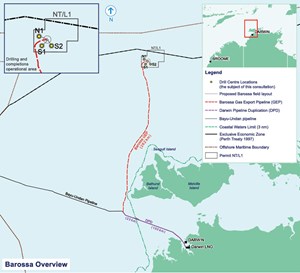
Santos projects a 20% to 30% surge in production for the second half of 2026 compared to the first half, driven by the ongoing expansion of its Pikka oil project in Alaska and the Barossa gas development off the coast of Australia.
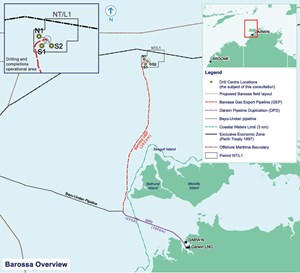
Image: Santos Ltd.
During the first half of the year, the company generated 45.6 MMboe in production, representing a 3% year-on-year increase. Santos recorded EBITDAX of $1.6 billion alongside $2.6 billion in sales revenue.
The Pikka development reached its first oil milestone in May, transitioning to continuous operations in June and delivering its inaugural crude shipment in August. Output is projected to scale up to its full gross plateau rate of 80,000 bpd late in the third quarter.
According to CEO Kevin Gallagher, drilling operations at Pikka are outperforming technical benchmarks, which has successfully lowered both well delivery times and overall drilling expenditures.
“The first half of the year was a pivotal period of progress for Santos,” Gallagher stated. “We safely initiated operations at Pikka and continued pushing Barossa through its commissioning phase toward stable production, all while our core operations maintained a robust performance.”
Meanwhile, output at the Barossa project has climbed to roughly 550 MMcfd and is on track to hit approximately 600 MMcfd by the close of the third quarter. The asset exported seven LNG shipments through the end of June, with an additional five shipped since the start of July. Once running at steady-state capacity, Santos anticipates exporting one cargo about every eight days from the Darwin LNG terminal.
As major capital expenditures for both Pikka and Barossa begin to wind down, the company expects the rising production volumes to drive higher free cash flow in the latter half of the year.
Santos is also moving forward with the Papua LNG venture, aiming for a final investment decision by the fourth quarter of 2026. Financing efforts are underway, with the company targeting project debt facilities to cover at least 60% of the project’s development costs.
In the Cooper basin of Australia, the company sanctioned the Moomba Central Optimization initiative. This project is designed to shave more than $600 million off lifetime capital and operational expenditures for the Central Fields, while lowering unit production costs by up to $3/bbl.
Operating activities yielded $378 million in free cash flow for Santos during the first half. The company noted that this figure was temporarily impacted by startup expenses at Pikka and Barossa, the timing of cargo shipments, and a PNG under-lift of about 1.3 MMboe, all of which are expected to balance out in the second half of the year.
Top image: The Pikka oil development in Alaska. Image: Repsol.