Sinopec’s Quarterly Profit Soars 64% Driven by Oil Price-Fueled Margin Growth
 admin
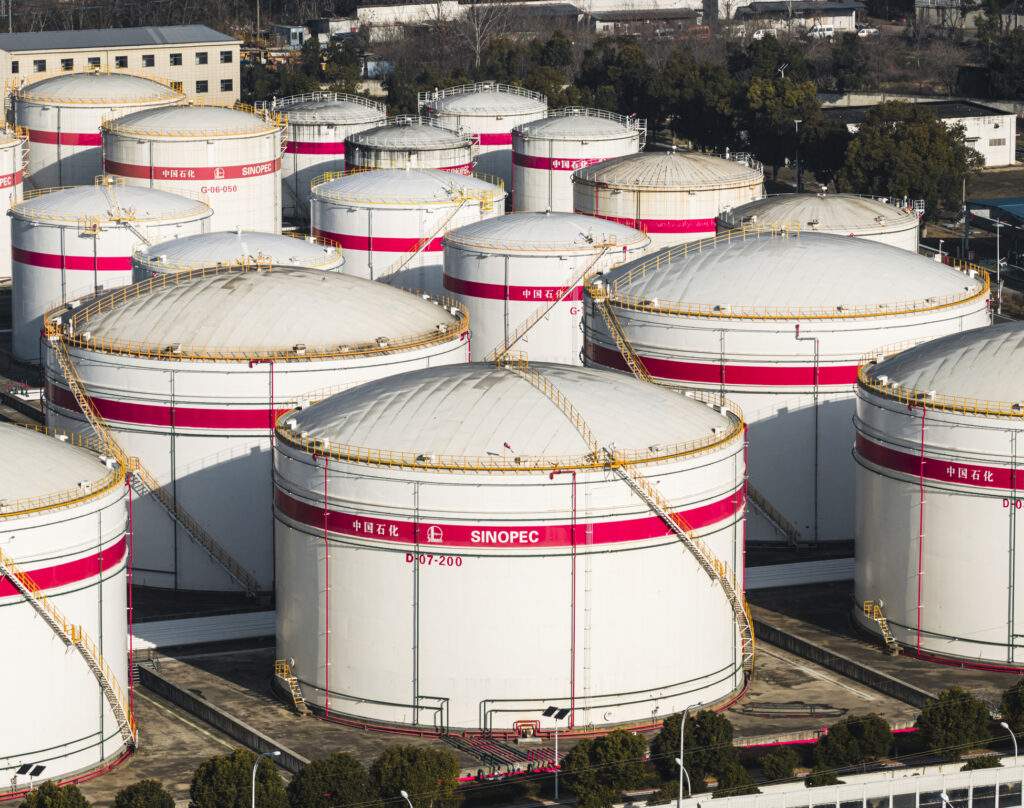

(Oil & Gas 360) – A 63.6% surge in third-quarter net profit was reported by China Petroleum & Chemical Corporation (Sinopec), driven by stronger crude oil prices and healthier refining margins that offset falling domestic fuel demand, highlighting shifting dynamics within China’s energy sector.
Net profit under international accounting standards reached roughly $2.04 billion (13.6 billion yuan) for the July–September period, up from $1.25 billion (8.31 billion yuan) in the same quarter last year. Revenue for the quarter rose 9.3% to about $115.6 billion (769.7 billion yuan).
This financial growth occurred alongside a slump in Chinese demand for conventional transport fuels, as elevated oil prices and the rapid expansion of alternative energy sources continue to alter consumption habits.
Data from Sinopec shows that Chinese refined fuel consumption dropped 8.6% over the first nine months of 2026. Petrochemical demand experienced a similar downturn, with ethylene-equivalent consumption dropping 9.4%.
Stronger global crude prices buoyed performance across Sinopec’s integrated business. During the first nine months, Brent spot prices averaged roughly $94.05 per barrel, marking a 32.7% increase year-over-year.
The firm also capitalized on expanding refining margins and a strategic pivot toward higher-margin products, prioritizing outputs such as jet fuel and naphtha.
As a result, nine-month refining earnings before interest and taxes surged to around $4.52 billion (30.10 billion yuan), up sharply from $1.05 billion (7 billion yuan) in the previous year’s period.
Conversely, operational volumes trended downward.
Sinopec processed 167.37 million metric tons of crude oil over the nine-month span—roughly 4.48 million barrels per day—representing a 10.2% drop.
Total sales of refined fuels fell 11.4% to 151.91 million metric tons. Output of diesel dropped 9.2%, gasoline fell 6.4%, and jet fuel decreased 5.9%.
The chemical segment continued to face headwinds, posting an operating loss of roughly $254 million (1.69 billion yuan), though this marked a significant narrowing from the $1.23 billion (8.22 billion yuan) loss recorded a year earlier.
In upstream operations, crude production dipped slightly, whereas natural gas output rose 1.4% over the first three quarters.
Capital expenditures totaled approximately $11.18 billion (74.5 billion yuan), with more than 50% allocated to exploration and production.
For market observers, Sinopec’s performance demonstrates how strong commodity pricing and processing spreads can temporarily cushion companies from declining sales volumes.
Nevertheless, shrinking fuel demand in China raises ongoing questions regarding long-term refinery throughput, fuel consumption trends, and capital allocation.
These trends also carry broader implications for international crude suppliers that rely heavily on demand from Chinese refiners.
Moving forward, market participants will watch whether refining profitability can be sustained if oil prices cool, particularly as China’s transportation and petrochemical sectors continue to evolve.
Ultimately, Sinopec’s results showcase the need to separate price-driven financial gains from fundamental shifts in energy demand.
Disclaimer
This informational, opinion, and insights article is provided for informational purposes only and does not constitute investment, legal, or financial advice. The views expressed are based on publicly available information and market conditions at the time of publication and are subject to change without notice.