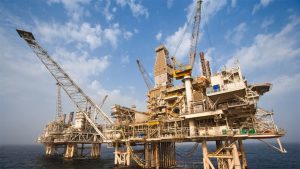
Guyana’s Offshore Assets Drive ExxonMobil’s Growth Strategy
 admin

ExxonMobil (NYSE: XOM) is projected to push its offshore crude output in Guyana past 1 million barrels per day (bpd) in the coming weeks. This rapid expansion places Guyana among the fastest-growing oil producers globally, altering the international market landscape and challenging traditional exporters.
The capacity bump follows the November launch of Uaru, the fifth project in the offshore Stabroek block. With Uaru online, the country’s total installed capacity sits at 1.1 million bpd, though production is still scaling up toward that ceiling.
Alistair Routledge, President of ExxonMobil Guyana, noted that Uaru produced roughly 80,000 bpd last week. Its floating production, storage, and offloading (FPSO) unit, the *Errea Wittu*, is targeted to hit its full 250,000 bpd capacity by Q1 2027.
Guyana’s rise to a major oil exporter has taken less than seven years since its first commercial production in late 2019. ExxonMobil leads operations on the Stabroek block with a 45% stake, alongside Chevron (30%, via its Hess acquisition) and CNOOC (25%).
The consortium is also diversifying into natural gas. ExxonMobil recently greenlit the $12.5 billion Longtail project—its eighth Stabroek development—which is slated to begin gas and condensate extraction in 2030. Longtail is engineered to process 1.2 billion cubic feet of gas and up to 250,000 barrels of condensate daily. Meanwhile, work continues on the Whiptail and Hammerhead offshore developments, ensuring long-term supply growth into the 2030s.
This surge arrives as global oil markets face potential oversupply. The International Energy Agency expects global output to outpace demand by roughly 1.7 million bpd in Q4 2026. Surging non-OPEC output from regions like Guyana presents an ongoing hurdle for OPEC+ in its efforts to stabilize prices and manage inventory.
For ExxonMobil and Chevron, Guyana serves as a primary driver of operational growth and cash generation. Concentrating multiple projects within the Stabroek block allows the partners to optimize infrastructure, supply chains, and technical assets. The ongoing expansion—particularly into natural gas—also signals continued demand for oilfield service providers, engineering firms, and subsea equipment suppliers.
From an investment standpoint, Guyana’s rapid scaling demonstrates the cost-competitiveness of major deepwater developments compared to other supply sources. Key metrics for investors will remain focused on execution efficiency, operating costs, reservoir yields, and broader commodity price trends. Reaching the 1 million bpd milestone solidifies Guyana’s role in global energy security and supply diversification.