Strathcona Proposes 250,000-bpd Prince Rupert Oil Terminal Facing BC Tanker Ban
 admin
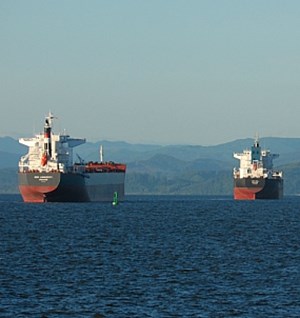

(Bloomberg) – A proposal for a new crude export terminal on British Columbia’s northern coast would see up to 250,000 bpd shipped overseas, though the project hinges on securing an exemption from Canada’s federal oil tanker ban.
Strathcona Resources Ltd. Executive Chairman Adam Waterous revealed the company intends to approach Prime Minister Mark Carney’s administration as soon as next week. The plan involves transporting crude by rail to a proposed marine terminal in Prince Rupert, B.C.
Coastal oil exports in northern B.C. remain highly contentious, drawing strong resistance from environmental organizations, local First Nations, and B.C. Premier David Eby. The current moratorium was enacted under former Prime Minister Justin Trudeau in 2019.
Waterous frames the rail initiative as a fast-track solution to meet Carney’s objective of diversifying Canada’s energy export markets away from the U.S., which currently absorbs approximately 90% of the country’s crude output.
“We believe we could move 250,000 barrels daily in less than two years, making this a potentially game-changing project for the nation,” Waterous stated during an interview.
In July, Carney directed state-owned Trans Mountain Corp. to advance plans for a new pipeline to B.C.’s southern coast while upholding the northern tanker ban. However, that pipeline project is not expected to be operational until the early-to-mid 2030s. Moving crude through Prince Rupert would boost B.C.’s current oil export capacity—presently limited to the Trans Mountain system—by nearly 50%.
Strathcona, a major oil sands operator, already moves up to 80,000 bpd of heavy crude to the U.S. Gulf Coast using rail assets it acquired in Hardisty, Alberta, and Hamlin, Saskatchewan, according to Waterous.
He noted that Prince Rupert is uniquely positioned for a crude facility due to existing rail infrastructure used for propane exports. The deepwater site could accommodate Very Large Crude Carriers (VLCCs) capable of holding over one million barrels. Addressing local concerns, Waterous suggested that economic partnerships and dialogue could resolve Indigenous opposition.
“We have significant groundwork and community consultations ahead of us,” he noted. “However, the underlying economics are exceptionally strong.”